Explore waterproof touch screen technology, IP ratings, and moisture protection. Learn to select water-resistant displays for outdoor, marine, and industrial applications.
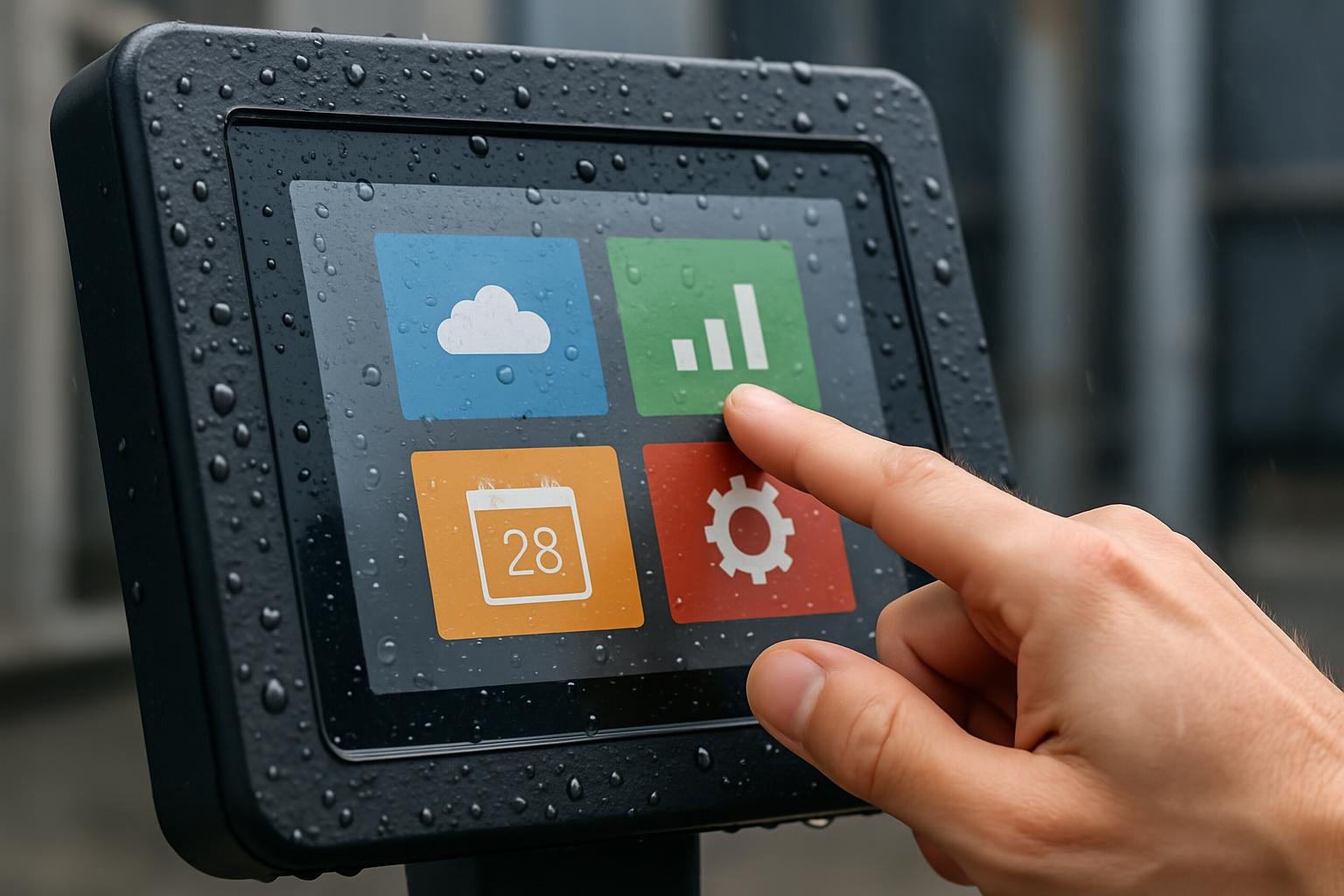
Waterproof touch screen with water droplets on surface
In today's increasingly connected world, touch screens are expanding beyond controlled indoor environments into challenging outdoor and industrial settings where exposure to water, moisture, and other liquids is inevitable. From outdoor kiosks and marine navigation systems to food processing equipment and medical devices, the demand for reliable waterproof touch screen solutions continues to grow. This article explores the technology behind waterproof touch screens, the IP rating system, and how to select the right solution for various application scenarios.
Understanding IP Ratings for Touch Screens
The Ingress Protection (IP) rating system, established by the International Electrotechnical Commission (IEC), provides a standardized method for evaluating the degree of protection that electrical enclosures provide against intrusion of foreign objects and moisture. For touch screens, this rating is crucial in determining their suitability for various environments.
The IP rating consists of two digits:
- The first digit (0-6) indicates protection against solid objects, from large body parts to fine dust
- The second digit (0-9) indicates protection against liquids, from dripping water to high-pressure jets and immersion
Common IP ratings for touch screens include:
| IP Rating |
Protection Level |
Typical Applications |
| IP54 |
Dust protected, splash resistant |
Indoor industrial, restaurant POS |
| IP65 |
Dust tight, water jets resistant |
Outdoor kiosks, food processing |
| IP66 |
Dust tight, powerful water jets resistant |
Marine, outdoor industrial |
| IP67 |
Dust tight, temporary immersion resistant |
Washdown environments, poolside |
| IP68 |
Dust tight, continuous immersion resistant |
Marine, underwater applications |
When selecting a waterproof touch screen, it's essential to understand the specific environmental challenges it will face and choose an appropriate IP rating accordingly.
Waterproofing Technologies for Touch Screens
Sealing Methods
Several techniques are employed to create effective water barriers for touch screen devices:
- Gasket Sealing: Elastomeric gaskets compress between the touch screen and enclosure, creating a watertight seal. This method is common in industrial applications and can achieve up to IP65 ratings.
- Adhesive Bonding: Special waterproof adhesives create permanent seals between the display and enclosure. This method is often used in consumer electronics and can achieve IP67 ratings when properly implemented.
- Ultrasonic Welding: For plastic enclosures, ultrasonic welding creates seamless joints that prevent water ingress. This technique is common in handheld devices and can achieve high IP ratings.
- Conformal Coating: Electronic components on the circuit boards are coated with a thin, protective polymer layer that repels moisture and prevents corrosion. This adds an additional layer of protection beyond the external sealing.
- Gore-Tex Vents: These specialized membranes allow air pressure equalization while blocking water molecules, preventing condensation inside sealed enclosures while maintaining waterproof integrity.
Touch Technologies for Wet Environments
Not all touch technologies perform equally in wet conditions:
- Projected Capacitive (PCAP): Modern PCAP screens can be designed with water rejection algorithms and specialized controllers that distinguish between water droplets and finger touches. These are ideal for outdoor applications where rain or splashes are expected.
- Surface Acoustic Wave (SAW): Traditional SAW technology is problematic in wet environments as water affects the acoustic waves. However, specialized versions with protective overlays can achieve moderate water resistance.
- Resistive Touch: While less affected by water on the surface, resistive technology typically achieves lower IP ratings due to its mechanical construction with air gaps.
- Infrared Touch Frames: Since the touch detection occurs around the perimeter rather than on the screen surface, this technology can be effectively sealed against water ingress.
STOUCH has developed specialized waterproof touch screen solutions to meet diverse application needs. Our flagship waterproof solution incorporates multiple protection technologies:
- IP65/IP66/IP67/IP68 ratings available depending on model
- Optically bonded PCAP technology with water rejection
- Operating temperature range of -20°C to 60°C
- Anti-glare and anti-fingerprint coatings
- Available in sizes from 7" to 32"
- High brightness (1000+ nits) for sunlight readability
- Specialized anti-corrosion treatments
- Glove and wet finger operation
- MIL-STD-810G shock and vibration resistance
Application Scenarios and Case Studies
Outdoor Kiosks and Digital Signage
Outdoor interactive kiosks face rain, snow, and condensation challenges. STOUCH's IP65-rated touch screens with high brightness and anti-glare properties provide reliable operation in these conditions.
Case Study: A major European city deployed 200 STOUCH-powered wayfinding kiosks throughout its downtown area. Despite experiencing over 150 rainy days per year, the kiosks maintained 99.7% uptime with no water-related failures over a three-year period.
Marine Navigation and Control Systems
Marine environments combine water exposure with salt spray, making them particularly challenging for electronic displays. STOUCH's MarineView™ series with IP67/IP68 ratings provides reliable operation even in these harsh conditions.
Case Study: A leading yacht manufacturer integrated STOUCH MarineView™ displays into their navigation systems. After extensive testing in the North Atlantic, including exposure to saltwater spray and occasional submersion during rough seas, the displays maintained perfect functionality with no degradation in touch performance.
Food Processing and Industrial Washdown Environments
Food processing facilities require equipment that can withstand regular cleaning with high-pressure water jets and sanitizing chemicals. STOUCH's IP66-rated industrial touch screens are designed specifically for these demanding environments.
Case Study: A major poultry processing plant replaced their standard industrial displays with STOUCH waterproof touch screens. The new displays withstood daily high-pressure washdowns with sanitizing solutions, eliminating the previous failure rate of 30% per year and reducing maintenance costs by 78%.
Design Considerations for Waterproof Touch Applications
When implementing waterproof touch screen solutions, consider these critical factors:
- Environmental Assessment: Thoroughly evaluate all potential water exposure scenarios, including direct rain, condensation, cleaning procedures, and accidental spills.
- Temperature Fluctuations: Rapid temperature changes can create condensation inside enclosures. Proper venting and sealing design must account for these conditions.
- Mounting and Installation: The interface between the touch screen and the mounting structure is often the most vulnerable point for water ingress. Proper gaskets and sealing methods are essential.
- Cable Entry Points: All cable entry points must be properly sealed with appropriate glands or connectors rated for the same IP level as the display.
- Maintenance Access: Design must balance waterproof integrity with the need for occasional maintenance access.
- User Interface Design: Software interfaces should account for potential water droplets on the screen, using larger touch targets and confirmation gestures to prevent accidental activation.
Testing and Validation Procedures
To ensure waterproof touch screens meet their specified IP ratings, rigorous testing is essential:
- Water Jet Testing: For IP65/IP66 ratings, displays are subjected to water jets at specified pressures and angles to verify seal integrity.
- Immersion Testing: For IP67/IP68 ratings, displays are submerged at specified depths for defined periods to confirm water resistance.
- Thermal Cycling: Displays are subjected to rapid temperature changes to test for seal integrity during expansion and contraction.
- Salt Spray Testing: For marine applications, displays undergo accelerated corrosion testing with salt spray to verify long-term durability.
- Touch Functionality in Wet Conditions: Touch accuracy and responsiveness are tested with water droplets, streams, and wet fingers to ensure reliable operation.
STOUCH conducts all these tests in our state-of-the-art laboratory facilities, ensuring our waterproof touch screens meet or exceed their specified ratings.
Conclusion
Waterproof touch screen technology has evolved significantly, enabling reliable touch interfaces in increasingly challenging environments. By understanding IP ratings, waterproofing technologies, and application-specific requirements, you can select the optimal solution for your needs.
STOUCH's comprehensive range of waterproof touch screen solutions combines advanced sealing technologies, specialized touch sensors, and robust design to ensure reliable operation in wet and challenging environments. Whether your application involves outdoor exposure, industrial washdown, or marine conditions, there's a waterproof touch screen solution that can meet your requirements.
For more information about STOUCH waterproof touch screen solutions or to discuss your specific application requirements, contact our engineering team for a consultation.

